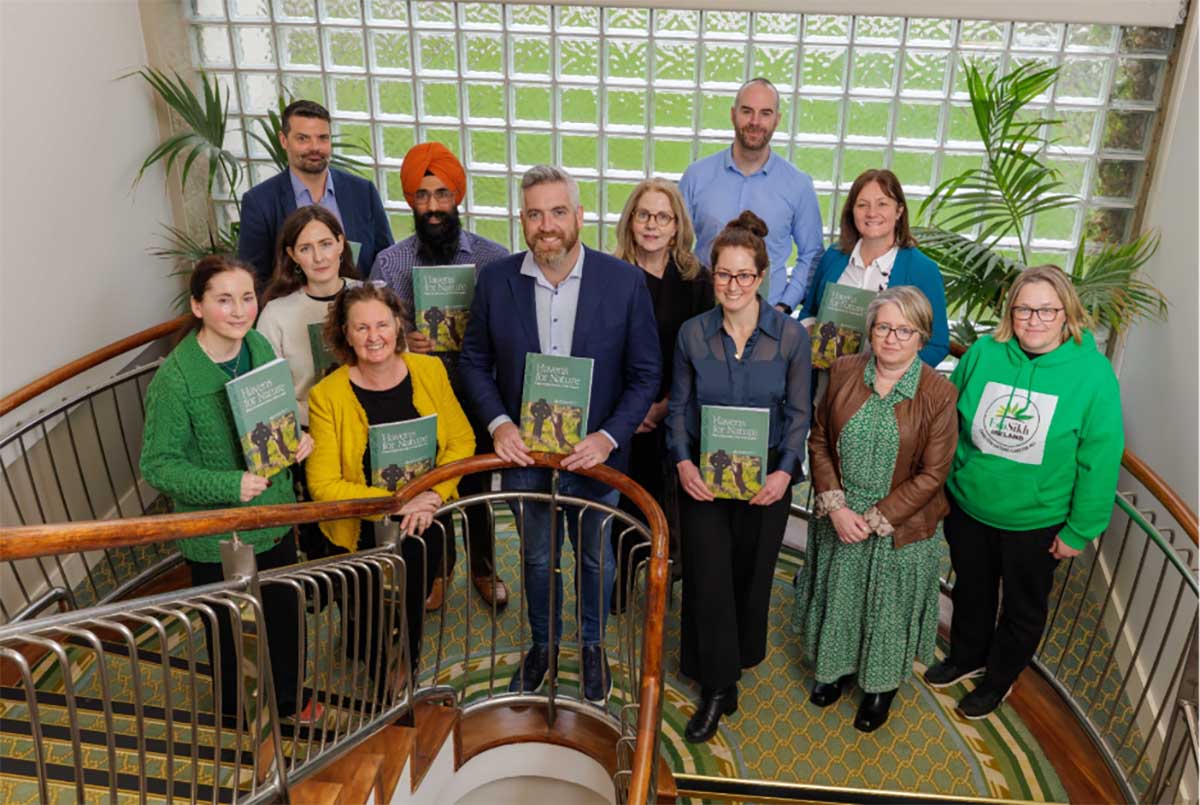
Faith communities across Clare are being encouraged to play a leading role in tackling the biodiversity crisis with the launch of Havens for Nature: Supporting Biodiversity in Faith Grounds, a new booklet commissioned by the Heritage Council in collaboration with Local Authority Biodiversity and Heritage Officers.
The project was developed with guidance from Jane Mellett, Church Outreach Manager at Trócaire and a member of the Laudato Si’ Working Group.
The booklet invites churches and faith groups to return at least 30% of their grounds to nature by 2030, helping to create a nationwide network of wildlife-friendly spaces in towns, villages and rural areas. Many faith grounds already hold significant potential for biodiversity, often sitting at the heart of their communities.
Churchyards, graveyards, parish centres and other faith-owned lands can support pollinators, birds, wildflowers and other wildlife with relatively small changes in how they are managed. The booklet outlines practical steps for identifying areas suitable for nature, managing land sensitively, involving volunteers, and communicating biodiversity actions with local communities. Reflecting the diversity of faith life in Ireland, the booklet includes examples from Catholic, Church of Ireland, Sikh and Buddhist communities, demonstrating how different types of faith-owned land can contribute to biodiversity recovery.
By adopting the 30% by 2030 target, faith communities in Clare can make a meaningful contribution to local biodiversity while also creating more welcoming, peaceful spaces for people.
Barry O’Loughlin, Clare Biodiversity Officer, said: “We’ve started the process to support faith communities to map their sites and look at practical ways to retain and enhance existing features for biodiversity such as mature trees and native hedgerows. Simple, low-maintenance actions such as reducing mowing to create wildflower meadows, planting locally sourced native trees, installing nest boxes for red-listed birds and using more wildlife-friendly lighting can make a real difference for pollinators, birds and bats, while still respecting our built heritage.”
Virginia Teehan, Heritage Council CEO, said: “This guide comes out of real work already happening on the ground. It shows how faith communities can take practical, informed steps to help biodiversity within their own community and feel empowered to do so in ways that suit these sites.”
The Sunyata Buddhist Centre in East Clare has allowed parts of its land to regenerate naturally, creating habitats for birds, mammals and pollinators. Areas once used for agriculture now support a wide variety of wildlife, including red squirrels, badgers, foxes and birds. The centre maintains a low-intervention approach to land management, allowing habitats to develop at their own pace while providing paths for visitors.
Additional Clare examples highlighted in the booklet include parish churchyards where mowing has been reduced to allow wildflowers to flower and set seed, burial grounds where mature trees and stone walls are being retained as important habitats, and church grounds where small areas have been set aside for natural regeneration. These sites demonstrate how simple, low-maintenance actions can support biodiversity while respecting the historic and cultural significance of faith-owned places.
Havens for Nature: Supporting Biodiversity in Faith Grounds is now available to faith communities across Clare.
Please email Meadhbh Bolger, Heritage Council Biodiversity Officer, at mbolger@heritagecouncil.ie, if you would like a physical copy of the booklet.
The booklet can be accessed online at www.heritagecouncil.ie/publications.