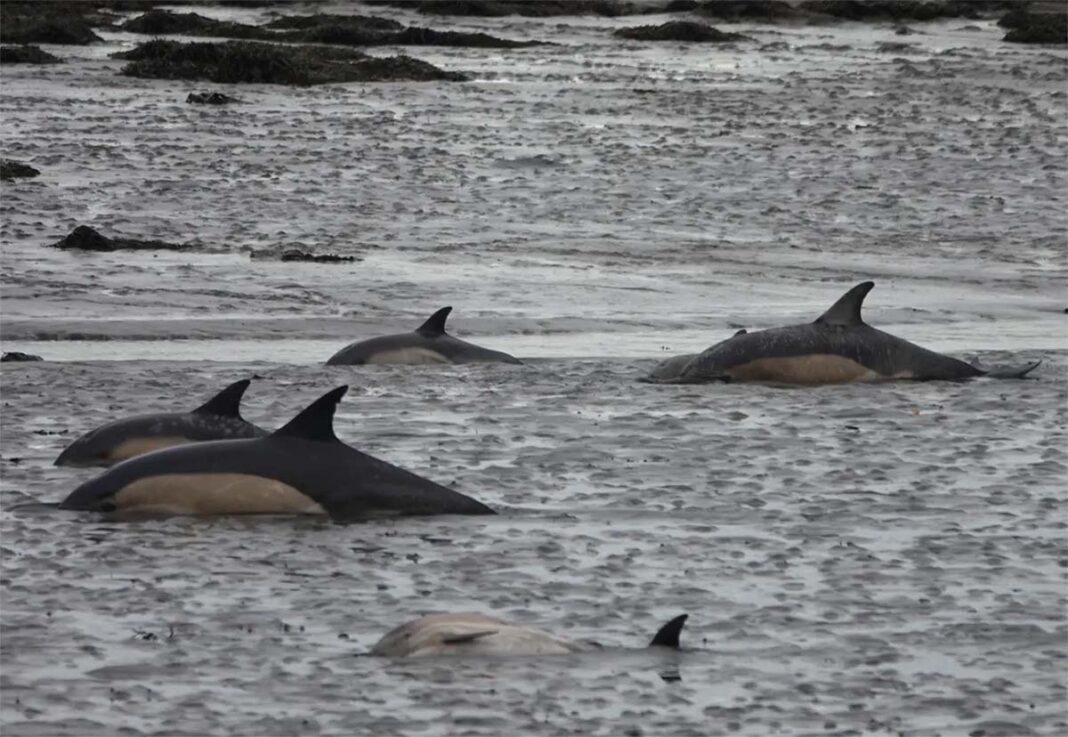
The majority of 28 common dolphins that mass stranded on the North Clare coastline at the weekend have been safely returned to the sea.
However, 7 dolphins were confirmed to have died in what’s believed to be the second largest mass stranding of dolphins in Ireland.
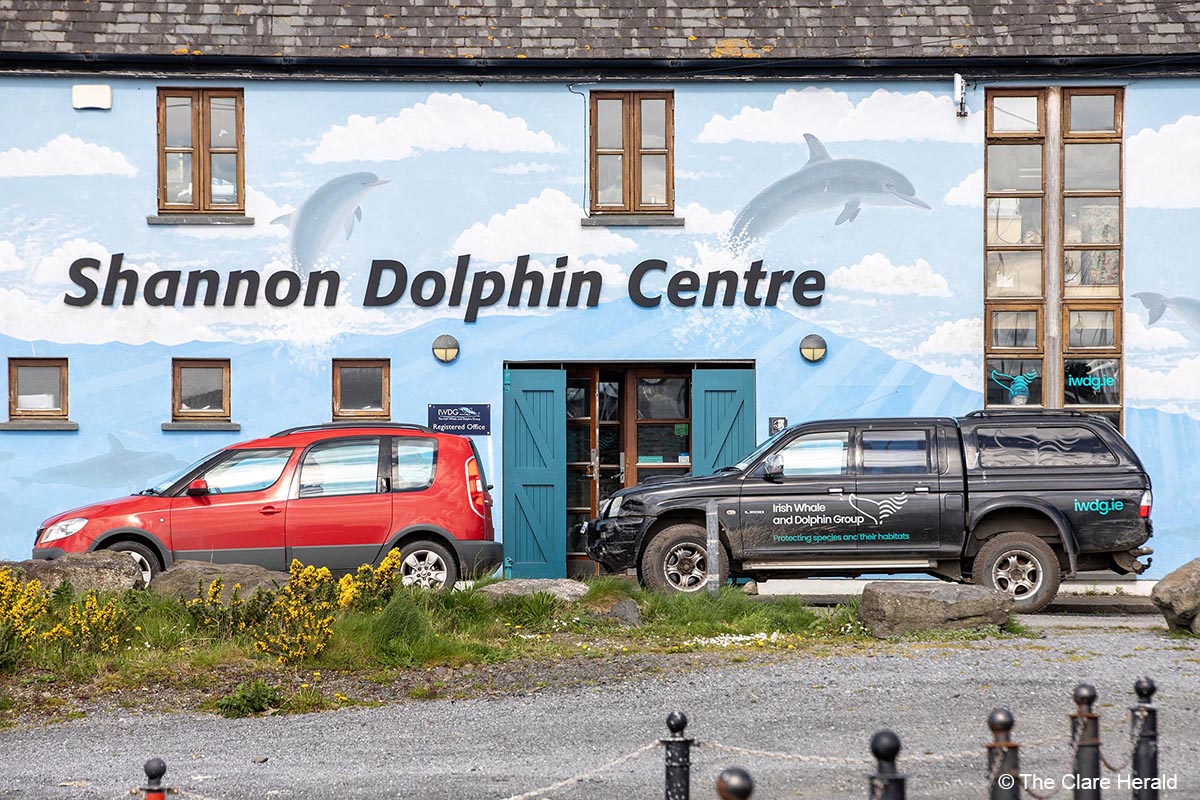
Irish Whale and Dolphin Group (IWDG) staff and volunteers were alerted to the incident at Ballyvaughan and mounted a two-day stranding response.
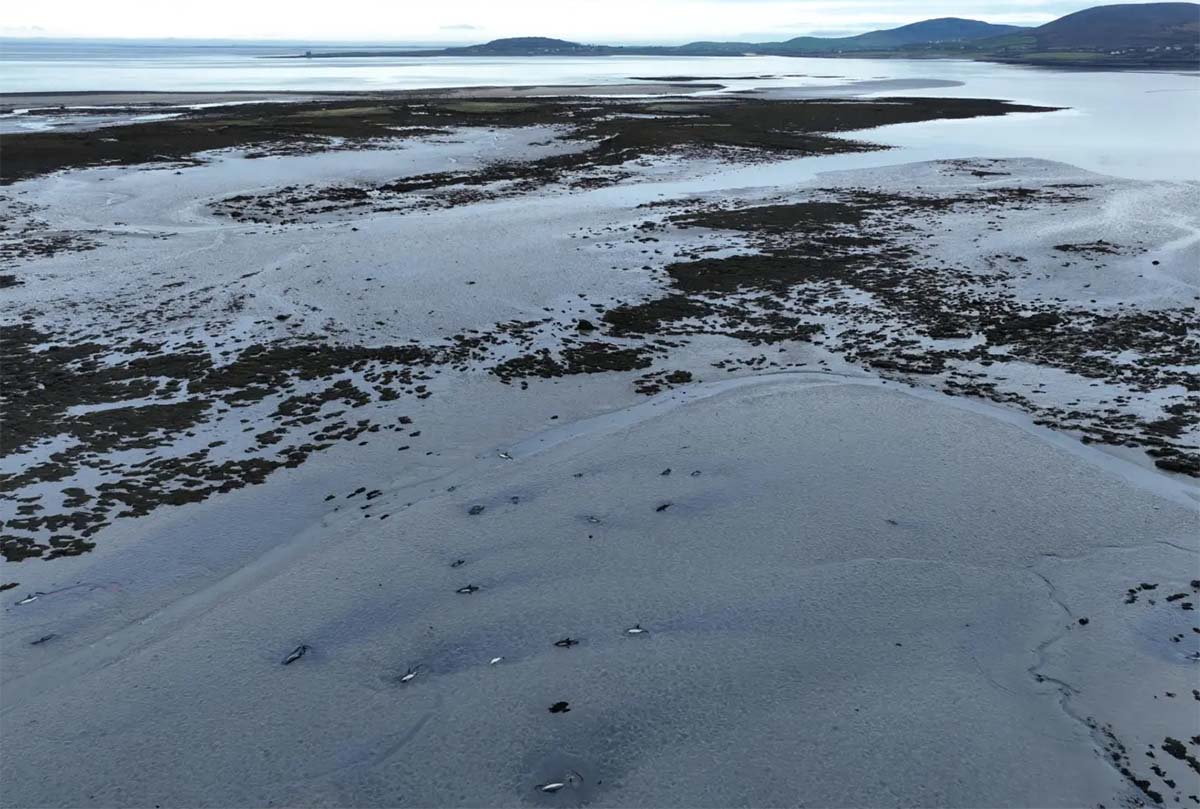
The IWDG reports that all the dolphins appear to have been healthy but seem to have become disoriented in a muddy area behind a spit which can happen with pelagic dolphins, who are more used to open water.
An IWDG spokesperson said: “Sadly 7 dolphins are confirmed dead, but all others made it out after a huge effort from all involved. There were six other dolphins in the shallows further out, which luckily avoided live stranding and reunited with some of the refloated pod members late Saturday evening.”
“This area was very very difficult to work in, due to soft mud. The safest option for all was to wait for a natural refloat with the incoming tide. When the tide returned, the first four refloated at approximately 1:30pm, with the remaining group of 24 refloating shortly before 3:00pm.
Once the tide had risen enough to permit limited intervention, IWDG responders assisted numerous dolphins, including calves swimming in the wrong direction. Some calves swam directly to their mothers once freed from seaweed and gently guided.
Early on Sunday morning, members of the local community checked the area and reported back to IWDG that several dolphins were again in shallow water.
IWDG volunteers were mobilised and, assisted by National Parks and Wildlife Service (NPWS), located and attended to eight dolphins. These animals were positioned upright, monitored, and cared for, awaiting the incoming tide which took several hours.
All eight dolphins were refloated during the incoming tide and herded out of the bay. There was no sign of them when the last volunteer left the area, so fingers crossed all remained out of the area overnight,” the IWDG confirmed.
Live strandings are extremely difficult and often heartbreaking, but responders on scene worked calmly and carefully to give these dolphins the best possible chance of survival in an area where deep mud severely limits intervention.
The IWDG has thanks its own IWDG responders and officers, NPWS and the local community who supported the response and helped ensure the safest possible outcome in extremely challenging conditions.
Some responders attended both days, both which were long on full days. A huge heartfelt thanks to all who responded and coordinated this live stranding response so well in challenging conditions.
In the event that you ever encounter a live-stranded dolphin, the IWDG advice is:
Do not drag the animal, especially by the tail — this can cause serious or life-ending injury.
Take a photo or short video for IWDG.
Record the location on Google Maps or note GPS coordinates.
Call the IWDG Emergency Stranding Hotline immediately with this information on 097 28128
IWDG responders will assess the scene and the animal, which helps determine the safest and most appropriate course of action on welfare and human safety grounds.
*Well done to all involved. Mary, Perry, Paulo, Aisha, Sean, Trea, Kevin, Csilla, Marcus, Brendan, Cian, Sibéal, Scott, Melissa, Penny (NPWS) and Deirdre (NPWS).