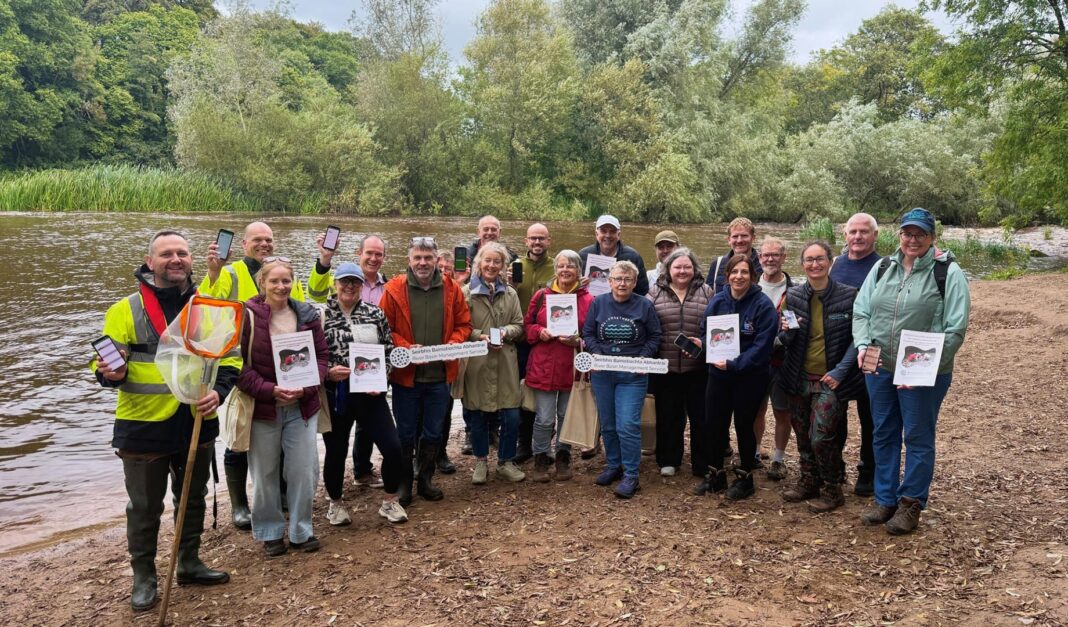
Communities in Co. Clare are being invited to discover what lies beneath the surface of their local streams and help build a better picture of the health of Ireland’s waterways, as the River Basin Management Service launches new citizen science guidance and a dedicated app for water quality monitoring.
The launch marks World Rivers Day 2026, celebrated on Sunday 27th September, and aims to inspire people of all ages to become more involved in understanding, protecting and restoring Ireland’s rivers and streams.
The new A Beginner’s Guide to Water Quality Monitoring: The Citizen Science Stream Index (CSSI) makes it easier for communities to learn how to monitor their local waterways using tiny aquatic animals, scientifically known as macroinvertebrates, as indicators of water quality.
Alongside the guidance, the River Basin Management Service has developed the new CSSI App, a digital tool designed to help citizen scientists capture, store and share their findings easily.
Encouraging would-be citizen scientists to use the app, Minister of State for Nature, Heritage and Biodiversity, Christopher O’Sullivan TD, said: “This World Rivers Day, I am delighted to welcome the launch of the new Citizen Science Stream Index guidance and app, which will help communities across Ireland to play a direct role in understanding the health of their local waterways.
By making water quality monitoring more accessible, these new resources will empower communities to become active stewards of their local streams, while contributing valuable information to help monitor the overall health of our waterbodies.
I encourage communities, families, schools and local groups to get involved, discover the wildlife in their local streams and play their part in protecting our rivers for generations to come.”
Anthony Coleman, Director of Services at the River Basin Management Service, added: “The Citizen Science Stream Index was developed to make the story of local rivers and streams accessible to communities. With the launch of our new beginner’s guidance and CSSI App, we are giving people the tools and confidence to explore their local streams, record what they find and contribute to a growing picture of water quality across Ireland.
Small streams may not always be monitored regularly, but they are an important part of our catchments. Citizen science can help bridge this information gap, providing valuable local observations to complement the work of professional scientists.”
Small streams play a vital role in Ireland’s freshwater environment, accounting for over 75% of Irish rivers. They provide important habitats for aquatic life, including Atlantic salmon and brown trout, and connect to larger rivers, lakes and coastal waters.
The CSSI focuses on six relatively common aquatic invertebrate groups that can be identified with a minimum of training. They are divided into ‘good guys’ and ‘bad guys’. The three ‘good guys’ associated with healthier, cleaner water are green caddisflies, flattened mayflies, stoneflies while the three ‘bad guys’ – leeches, the water louse, snails – are more tolerant of pollution.
By looking at which groups are present in a stream, citizen scientists can build a basic picture of its biological water quality. Repeated surveys can help reveal changes over time and provide useful information to support local action to improve water quality.
The CSSI guidance also highlights simple actions communities can take to help protect streams, including planting riverbank vegetation, implementing nature-based solutions, reducing pesticide use and ensuring septic tanks are properly serviced.
The new guidance and app will encourage more people to become active stewards of their local waterways, helping to build a stronger national picture of water quality while connecting communities with the natural environment on their doorstep.
If you or your community group are interested in getting involved, contact your local Senior Community Water Officer – Colum Walsh via cwalsh@riverbasin.ie – who can provide further advice, support, and training opportunities.
All survey results should be submitted to the River Basin Management Service. When verified, this data will be shared with the National Biodiversity Data Centre and used by the River Basin Management Service to inform their catchment assessment process.
While citizen science data is not intended to replace statutory monitoring programmes, it serves as an important complementary evidence source. Its principal benefits include enhancing local knowledge, increasing the spatial and temporal coverage of observations, strengthening community engagement, and helping catchment scientists to target investigations and resources more effectively.
A Beginner’s Guide to Water Quality Monitoring: The Citizen Science Stream Index (CSSI) was developed in collaboration with Dundalk Institute of Technology, University College Cork, University College Dublin and the Department of Housing, Local Government and Heritage.
For more information visit www.riverbasin.ie/citizen-science