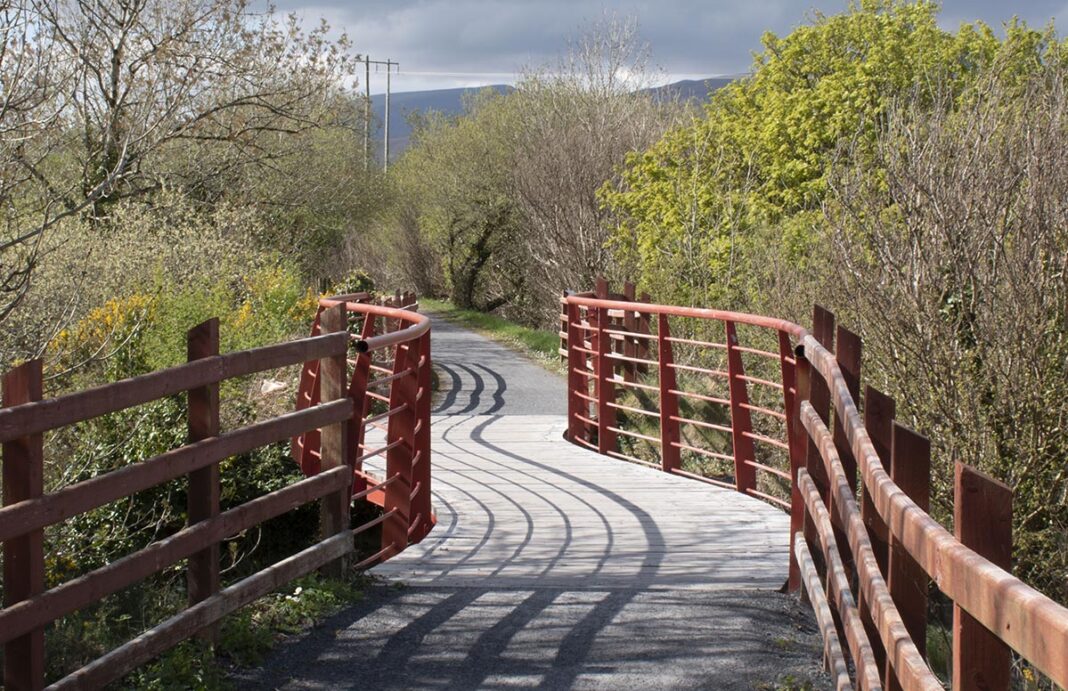
Clare County Council is submitting the first section of the West Clare Railway Greenway to An Coimisiún Pleanála for development consent, marking an important milestone in the progression of the Kilrush to Kilkee section of the project.
The proposed greenway will follow the route of the former West Clare Railway, where feasible, and aims to provide a safe, accessible and attractive recreational route for local communities and visitors.
As part of the planning process, Clare County Council has also commenced steps to acquire lands required for the Kilrush to Kilkee section of the greenway.
This stage of the process is the result of five years of preparatory work engaging with landowners, farming representatives and the local community. All affected landowners have been consulted with in advance of the publication of notices. Clare County Council will continue to advance the ‘Voluntary Land Acquisition Process’ including farm accommodation works in parallel with the required statutory process agreed in the “Code of Best Practice for National and Regional Greenways”.
The West Clare Railway Greenway is being developed as an accessible route for pedestrians, cyclists and people with impaired mobility. It will support active travel and provide new opportunities for recreation, tourism and connectivity between places of work, education and leisure.
Deputy Chief Executive and Director of Service for Housing with Clare County Council, Alan Farrell, thanked all those involved, including landowners, representative bodies, stakeholders and members of the public, for their ongoing support and cooperation in helping to progress the scheme to this important milestone.
He said the greenway delivery team had worked closely with all parties throughout the process and that the work carried out to date demonstrated Clare County Council’s commitment to meaningful stakeholder engagement and to addressing any concerns as the project progresses.
“The provision of a greenway in this location will enhance access to the wider West Clare region while highlighting the importance of sustainable tourism, active travel, built heritage and the natural environment. Experience elsewhere in Ireland has shown that greenways can also act as powerful economic drivers, supporting sustainable tourism, creating local employment and helping to revitalise rural economies.
By attracting both domestic and international visitors, they generate ongoing revenue for local hospitality and recreation businesses while supporting long-term community health and development. This project also provides an opportunity to promote the historical and educational significance of the former West Clare Railway and to showcase the scenic character of the surrounding area,” he said.
Project updates and contact information for the Project Liaison Team are available on the project website: www.westclarerailwaygreenway.ie.