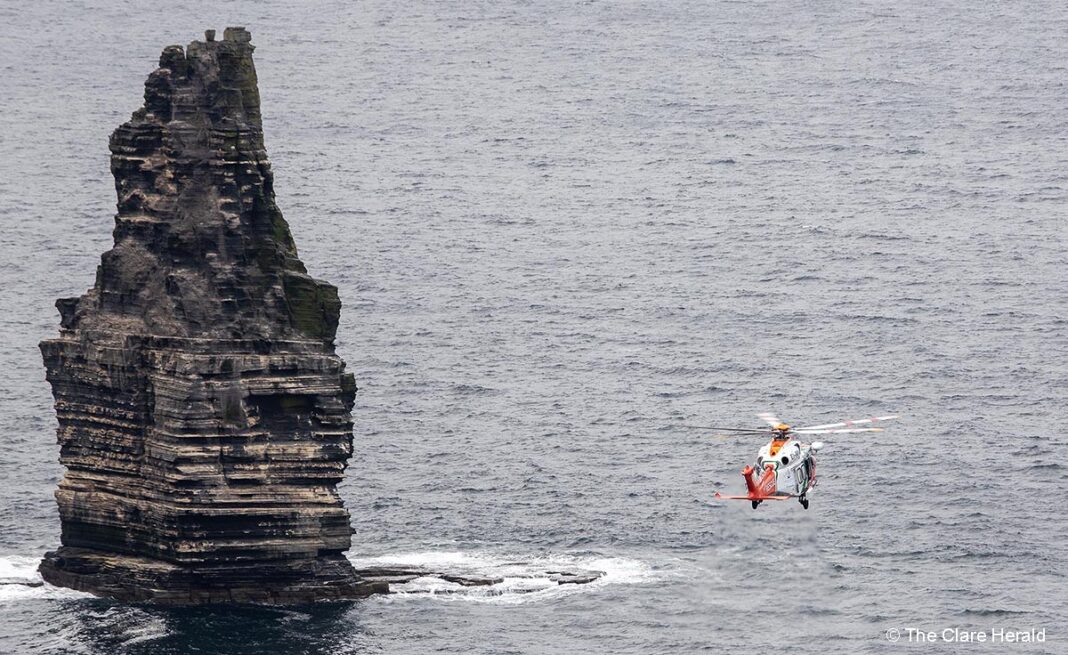
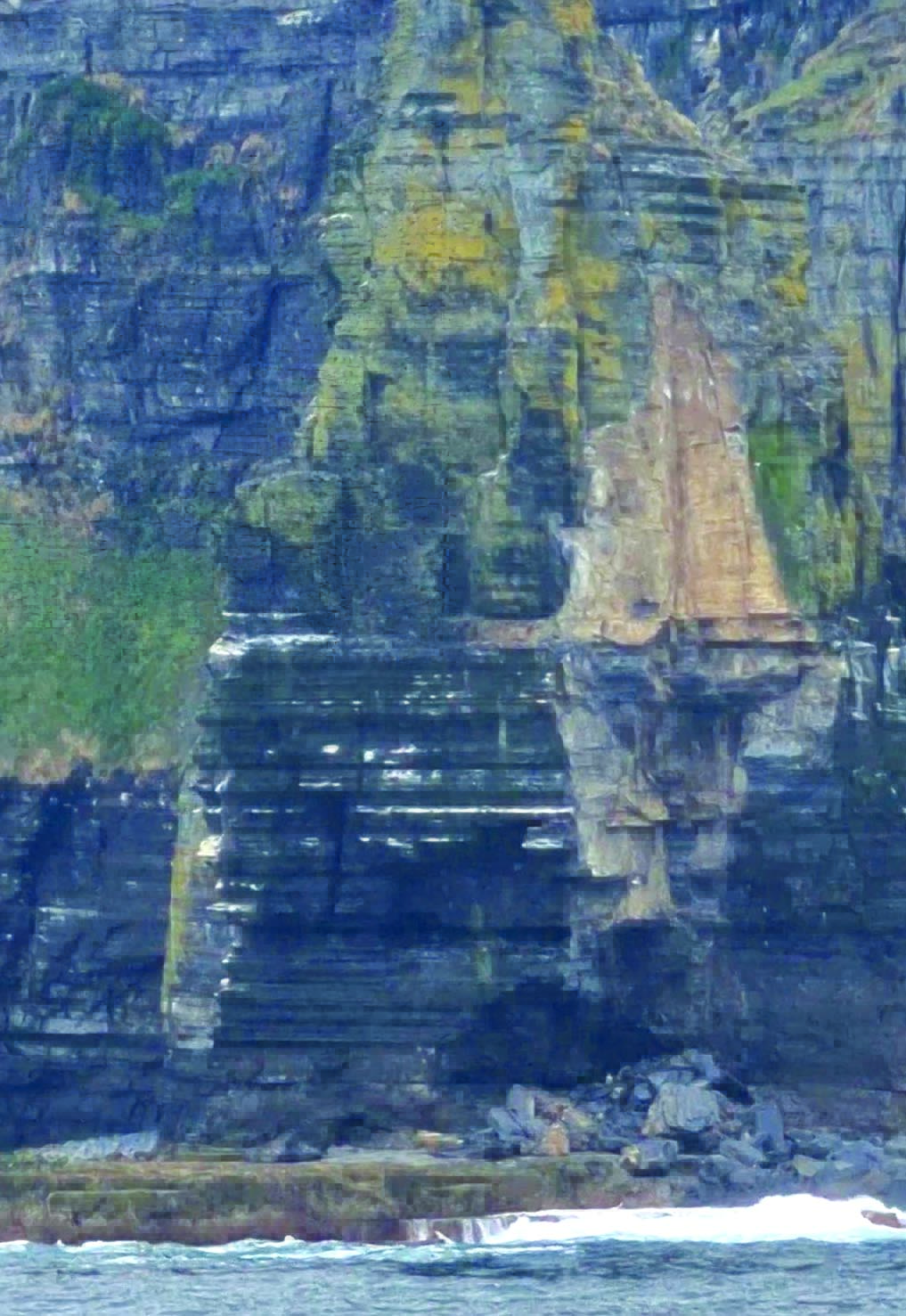
A large section of one of the most recognisable landmarks at the Cliffs of Moher in Co Clare has dramatically cracked away and fell into the Atlantic Ocean.
The iconic sea stack, An Branán Mór, stands at the base of the 702ft high cliffs and Thursday last, August 13th, a large portion collapsed into the sea.
The dramatic change was spotted by Captain Jim Griffin while operating a Doolin Ferry Cliffs of Moher Cruise. Jim grabbed his camera and his video went viral attracting approximately 3.4 million views to date.
Fortunately, the rockfall happened after the main seabird nesting season had ended. An Branán Mór and the surrounding cliffs provide important nesting habitat for the vast seabird colonies that return to the Cliffs of Moher each year.
The event is a dramatic reminder that the Cliffs of Moher are continually being shaped by the immense power of the Atlantic.
The Cliffs of Moher were formed around 320 million years ago from layers of sediment deposited by ancient rivers and compressed into sandstone, siltstone and shale. Ever since, the Atlantic has continually shaped the coastline, creating caves, arches and sea stacks. Standing 67 metres high, An Branán Mór was once part of the main cliffs before thousands of years of erosion separated it from the cliff face – a process that continues today.
An Branán Mór sea stack is one of the major highlights of the Doolin Ferry Cliffs of Moher Cruise, alongside the sea arch at Hag’s Head and the cave featured in Harry Potter and the Half-Blood Prince. From sea level, passengers experience the immense scale of the cliffs from a unique perspective, surrounded by the spectacular beauty and wildlife of the Atlantic coastline.
Stretching approximately 14 kilometres along the County Clare coast and reaching 214 metres (700 feet) at their highest point, the Cliffs of Moher form part of the Burren and Cliffs of Moher UNESCO Global Geopark and are renowned worldwide for their spectacular geology, scenery and wildlife.

Captain Jim Griffin said: “We sail past the sea stack daily, so I immediately noticed that a substantial section had broken away. The rock formation was created by thousands of years of erosion, and that process is still happening before our eyes. The reaction to the video shows just how fascinated people are by the Cliffs of Moher and the mighty power of the Atlantic”.
Rockfalls are a natural part of the evolution of the Cliffs of Moher, continually shaped by Atlantic waves, wind and weather. The latest change to An Branán Mór may have happened in moments, but the forces behind it have been at work for millions of years – and they are not finished yet.