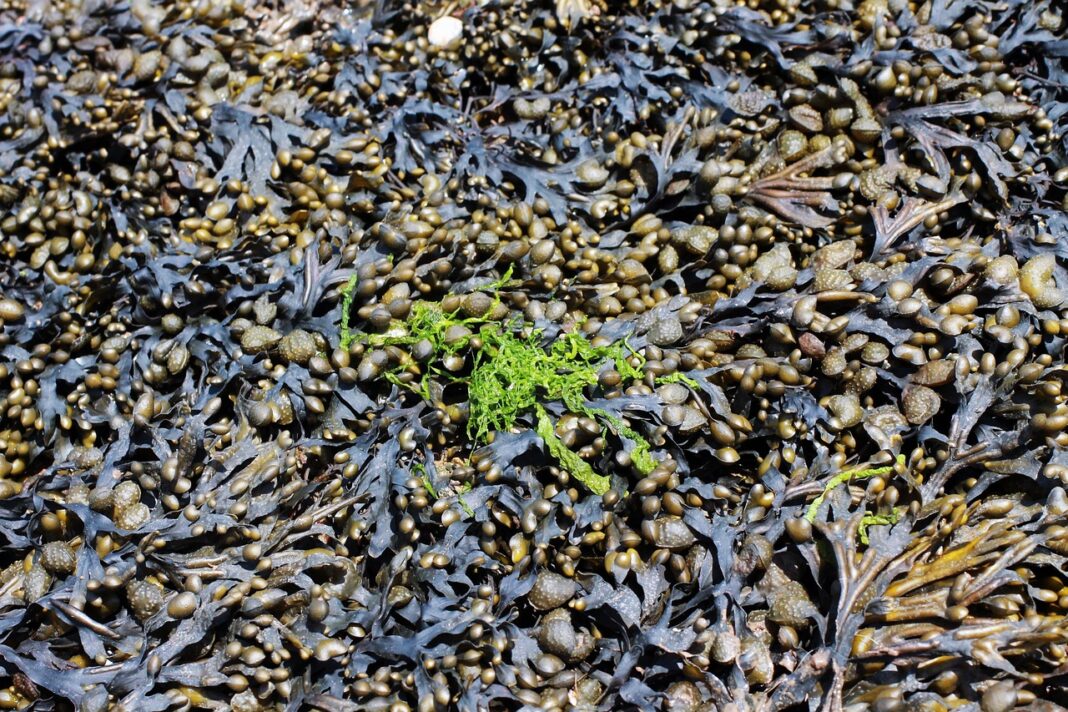
Clare’s Aontú representative has issued a strong warning about the growing number of large‑scale commercial seaweed‑harvesting applications along the west coast, saying they pose a direct threat to traditional harvesting rights, fragile marine ecosystems, and the long‑term resilience of coastal communities.
June Dillon said that communities in Clare and other coastal counties are increasingly concerned about the scale of proposed licences, some of which seek permission to harvest up to 11,000 tonnes of seaweed per year across areas exceeding 1,600 hectares.
“Seaweed is part of the lifeblood of many coastal families in Clare,” Dillon said.
“It protects our shores, feeds our land, and has sustained communities for generations. When you interfere with seaweed, you interfere with the rhythm of coastal life itself.”
Dillon highlighted that some of the companies seeking licences, including a Canadian multinational attempting to acquire harvesting rights along the west coast, could end up controlling vast stretches of shoreline traditionally managed by local families.
“Once these rights are sold off to foreign corporations, they’re gone,” she said. “Clare’s coastline is not a commodity to be traded on the Toronto Stock Exchange. If we hand over our seaweed beds, we hand over our future.”
She added: “If Clare loses its seaweed, it loses its armour. And no community should be left defenceless.”
Ms Dillon emphasised that seaweed beds are one of the most effective natural defences against coastal erosion and flooding, issues that already threaten vulnerable communities along the Clare coast.
“Strip away the seaweed and you strip away our first line of defence. No amount of concrete or consultants can replace what nature already does for free.”
Dillon said that traditional seaweed‑harvesting rights, often passed down through families, must be protected through the proper legal channels, not left vulnerable to corporate pressure or administrative oversight.
“There is a well‑established statutory mechanism through Tailte Éireann by which rights of this nature, often referred to as profit‑à‑prendre rights, can be formally recognised and registered. This process can involve providing evidence such as historical documentation, affidavits, and proof of longstanding customary use.”
She noted that traditional seaweed harvesting has been practiced for generations in coastal communities in Clare and beyond. While some rights are formally recorded in title documents, others arise from long‑standing local practice and customary use.
“Where rights are not already registered, there is a clear legal pathway available for individuals to seek recognition through the appropriate authorities,” she said. “It is not our role to adjudicate individual claims to such rights. The fairest approach is to ensure that local coastal communities have the opportunity, first and foremost, to protect and register the traditional practices they have carried out for generations.”
She added: “In practical terms, seaweed‑harvesting rights can be understood in a similar way to traditional turf rights, where individuals may have longstanding rights to harvest a natural resource even where the underlying land ownership may be complex. The key principle is that local people who have historically relied on and managed this resource should have the opportunity to maintain those practices and benefit from them.”
“Aontú stands firmly with coastal communities,” Dillon said. “Our coastline is not for sale. Our heritage is not for sale. And our people will not be pushed out.”
She concluded: “If we don’t stand up now, we risk losing something that can never be reclaimed. The sea gives life to the west, and we must protect it.”