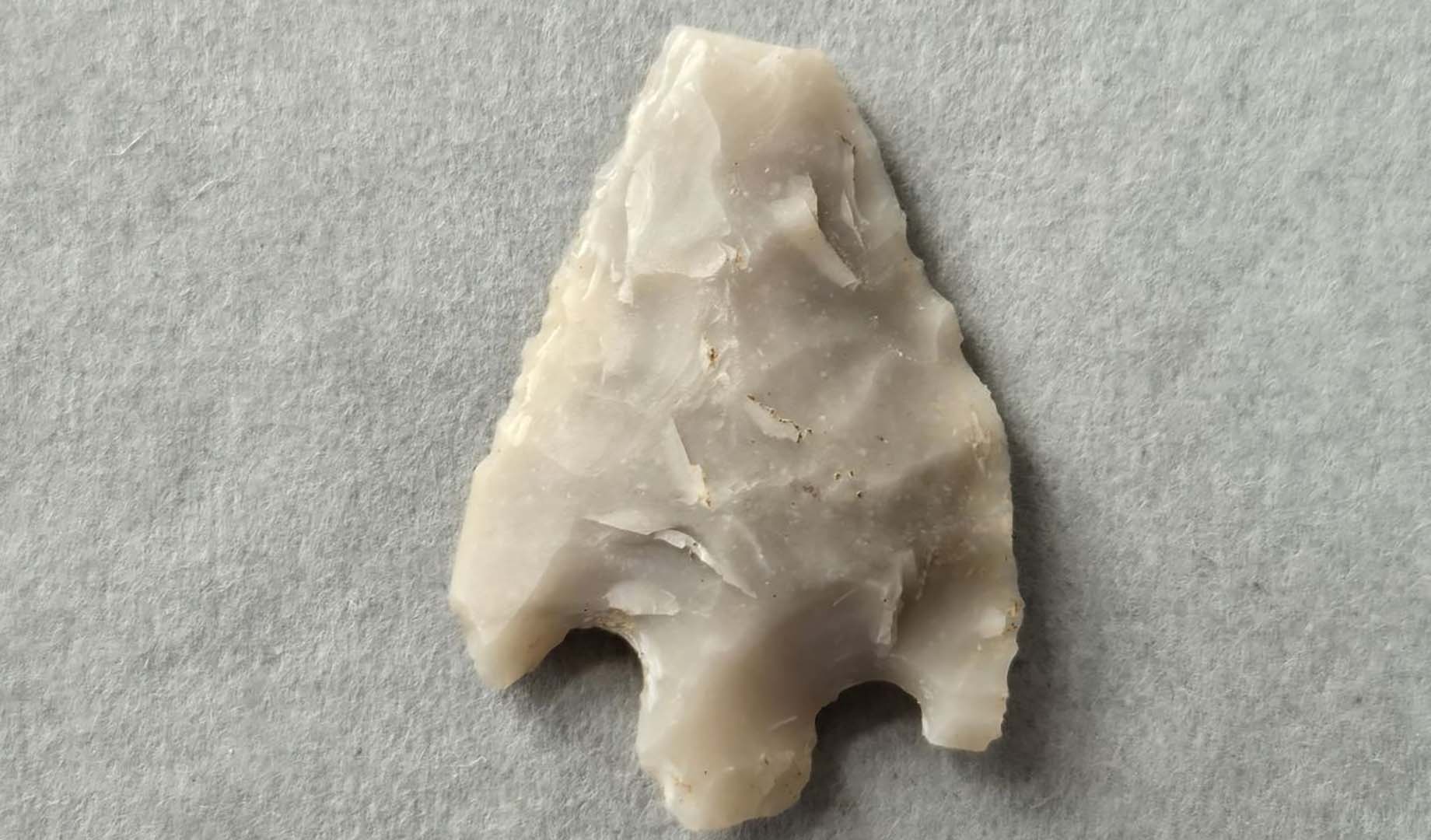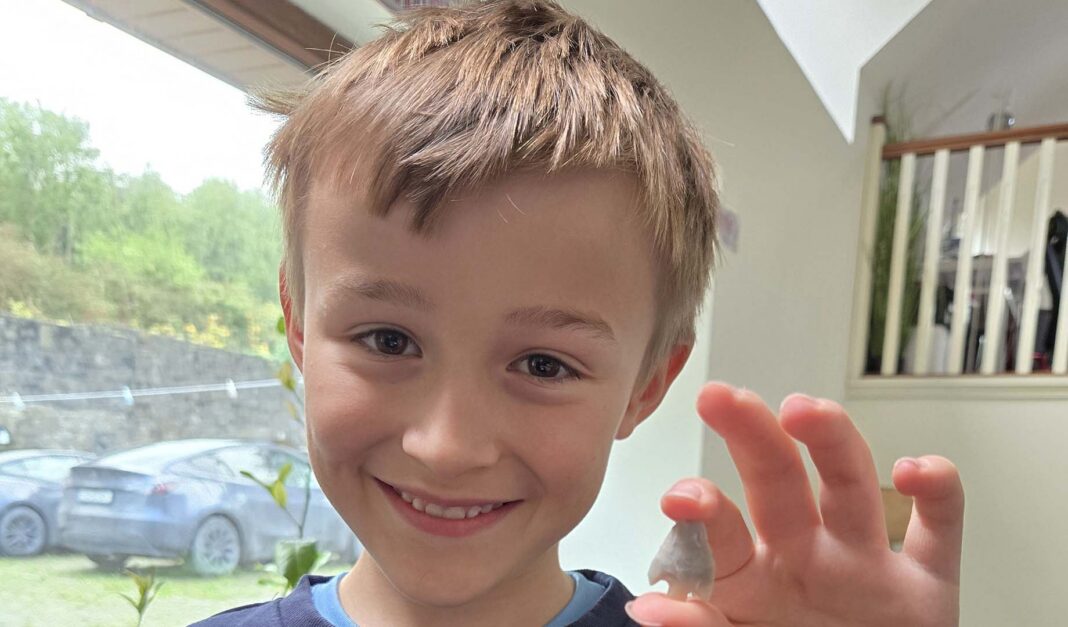
A prehistoric arrowhead has been received by Clare Museum after 11-year-old Ethan Cunneen of Reaskamogue, Sixmilebridge, discovered the artefact while walking on Woodcock Hill Bog.
Made of flint, the arrowhead dates from the Chalcolithic period at the start of the Bronze Age, between 2500 and 2200 BC. The tip of the arrowhead is broken, suggesting it may have been damaged after the arrow was released and then lost.
The barbed-and-tanged arrowhead was resting on the surface of a cutaway pathway or firebreak running parallel to a Coillte-managed forestry plantation. Ethan and his father, Martin Cunneen, knew their find was significant and contacted the National Museum of Ireland. The National Museum directed them to Clare Museum.
Curator at Clare Museum, John Rattigan said, “Ethan found the arrowhead on the surface, but the surface is about four feet below the surface of the bog as it exists today. Ethan was the first human to handle the arrowhead since the person who lost it more than 4,000 years ago. Over the millennia, the bog just grew up over it.”
On average, Clare Museum receives an archaeological object from a member of the public about once a year. These are usually stone axes or quern stones, but Ethan’s find is the first arrowhead acquired by the museum. A second archaeological object, part of a broken stone axe that is older than the arrowhead, was also found near Barefield this summer.
Archaeological objects are the property of the State and finders are obliged to report them to the National Museum of Ireland. As Clare Museum is legally designated to hold archaeological finds from County Clare, both the arrowhead and the stone axe fragment will remain in the county.
The objects will be catalogued by Clare Museum in the coming weeks before being photographed and uploaded to the museum’s website. They will be placed on temporary exhibition in 2027.