
A growing business is always making investment decisions, even when nobody calls them that.
Replacing equipment, upgrading premises, hiring staff, improving building controls and retaining cash for future plans all involve the same basic question: where will the company’s money create the greatest long-term value?
That question matters across County Clare, from professional firms in Ennis to hospitality businesses, healthcare practices and industrial operations around Shannon. The right answer will differ from one organisation to another. A small office may need better financial visibility before committing to a refurbishment. A manufacturer may have to choose between production equipment, building upgrades and additional working capital. A property owner may be balancing urgent maintenance against a larger resilience project.
Good investment decisions do not begin with a product. They begin with a defined business problem, reliable information and a realistic view of what the company can afford.
The objective is not to spend more. It is to allocate capital with greater discipline.
Establish the financial and operational baseline
Before approving a project, understand the company’s current position.
Start with cash flow rather than profit alone. A profitable business can still face pressure if customers pay slowly, stock absorbs cash or several tax and supplier obligations fall due at the same time. Review payroll, debt repayments, insurance, VAT, Corporation Tax, planned purchases and seasonal working-capital needs.
Current Revenue guidance for companies is the appropriate starting point for official information about Corporation Tax filing and related company obligations. Do not rely on an old article, remembered tax rate or informal advice when the timing of a payment affects available cash.
Then connect the financial picture with what is happening operationally.
Are repair costs increasing? Is equipment downtime affecting output? Are energy bills rising faster than occupancy? Has a building problem required several temporary fixes? These patterns often reveal where capital is being consumed without solving the underlying issue.
Create a clear distinction between three categories of money. The first is needed for ordinary operations. The second is committed to foreseeable expenditure, including tax, maintenance and approved projects. Only the third category should be considered genuinely available for longer-term decisions.
This exercise may be unglamorous. It is also where many expensive mistakes are prevented.

Make building performance easier to understand
Commercial premises can absorb money quietly.
Heating, cooling, ventilation, lighting and metering systems may operate according to schedules that no longer reflect how the building is used. Staff compensate with manual adjustments. Facilities teams respond to comfort complaints without having enough information to identify the cause. Faults are noticed only after they begin disrupting work.
The larger or more technically complex the property becomes, the less effective these informal routines tend to be.
Look for repeated warning signs. One area may overheat while another remains cold. Equipment may run outside occupied hours. A change in consumption may appear on a bill without a clear explanation. Several contractors may manage separate systems, leaving nobody with a complete view.
At that point, working with a building-controls specialist such as Standard Control Systems can help bring heating, cooling, ventilation, lighting and metering into a more coherent management strategy. The commercial value lies in visibility: understanding when systems operate, where faults occur and whether schedules match actual demand.
Technology still needs ownership. Decide who reviews the information, who can change settings and how unresolved faults are escalated. A sophisticated platform that nobody uses properly will not improve the building.
Smaller premises may not require an integrated system. They can still review timers, maintenance records and operating hours. Larger organisations considering installation or an upgrade can consult SEAI’s Building Management System guidance and check current business supports before building grant assumptions into a budget.
Treat the building as an operational asset. The more clearly you understand its behaviour, the better you can judge whether an upgrade deserves capital.
Invest in resilience before disruption becomes normal
Some property problems become familiar because the business keeps managing around them.
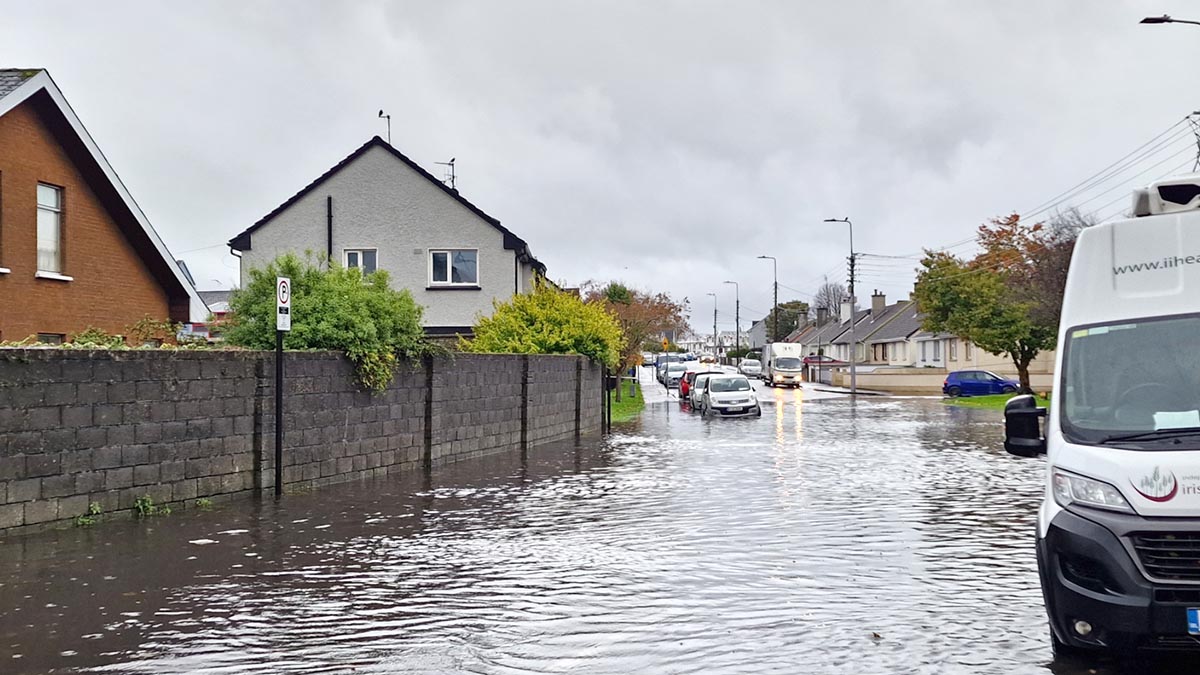
A recurring leak is patched. Water collects near an entrance after heavy rain. Roof outlets are difficult to inspect. Maintenance teams work around pipe routes that were never coordinated properly. Each incident may appear manageable, but repeated disruption, emergency repairs and damaged finishes gradually increase the real cost.
Rainwater management deserves particular attention on large commercial and industrial roofs. It affects drainage capacity, internal routes, structural coordination, inspection access and the future maintenance of the property.
For technically demanding developments, involving CapCon Engineering international rainwater management specialists early can help ensure roof drainage capacity, installation routes and maintenance requirements are considered alongside the wider design. The purpose is not to add complexity. It is to avoid treating drainage as an isolated package after other services have already claimed the available space.
Ask practical questions. Can outlets be inspected safely? Are drawings and maintenance information available to the facilities team? Is responsibility clear between owner, occupier and contractor? Has the design considered what happens during intense rainfall as well as ordinary conditions?
Local planning context matters too. Clare County Council’s current strategic flood-risk assessment addresses flood-risk management and sustainable drainage within development planning. A specific project still requires appropriate professional and planning advice, but the broader message is clear: water management should be integrated early.
Resilience investment is rarely exciting when everything is working. Its value becomes obvious when the alternative is closure, damage or repeated emergency work.
Compare projects using whole-life cost
The cheapest quotation is not always the least expensive choice.
A capital project creates costs beyond purchase and installation. There may be design fees, training, software licences, specialist maintenance, energy use, replacement parts and disruption during the work. Some systems become expensive because access is poor. Others depend on one supplier or require skills that are difficult to source.
Prepare a concise investment case for every substantial proposal.
Define the problem first. Then compare the available options, upfront expenditure, recurring costs, expected life, maintenance requirements and operational risks. Identify who will own the asset after handover and how the company will judge whether it has worked.
This approach applies to machinery, vehicles, fit-outs, building controls, drainage and software. It also helps prevent attractive projects from pushing necessary but less visible work down the list.
Be careful with projected returns. Estimates depend on assumptions about prices, usage, output and maintenance. Record those assumptions rather than presenting the forecast as certain. Some benefits, such as fewer interruptions or better fault information, may be commercially important even when they cannot be converted neatly into a single figure.
Sequence matters as well. Addressing a recurring defect may create more value than installing a new feature. Improving basic data may be necessary before deciding whether a larger upgrade is justified.
Capital discipline is not about rejecting ambitious projects. It is about giving the strongest projects a fair comparison.
Decide whether company cash is truly surplus
A healthy bank balance can create pressure to “put the money to work”. That does not mean it is ready to be invested.
First protect the company’s short-term obligations. Allow for payroll, tax, debt, supplier payments, insurance and seasonal fluctuations. Include approved capital projects and a contingency for events the business cannot predict precisely.
Next, consider timing. Money required for an expansion, property purchase or equipment replacement within the next year should not be treated like funds that can remain invested for a much longer period. Liquidity is part of risk.
Once these needs have been accounted for, carefully selected corporate investments may be considered for money that is genuinely surplus over an appropriate timeframe. A regulated adviser such as Opes Financial Planning can help directors assess risk, liquidity, diversification and how a proposed strategy fits the company’s wider objectives.
Investing company funds is not automatically the right decision. Market values can fall, products may be difficult to exit and investment income can have tax consequences. Directors also need to consider ownership structure and whether retaining money within the business remains aligned with their personal and commercial plans.
The Central Bank of Ireland’s investment guidance explains the role of regulated investment firms and advisers, while its public registers allow businesses to check authorised providers. Tax treatment should be confirmed separately through current Revenue guidance and professional advice.
The central question is not whether cash is sitting idle. It is whether the company can afford to place that cash at risk for the proposed period.

Review what happened after the money was spent
Investment discipline does not end with approval.
Return to the original proposal once the project or strategy has been operating long enough to assess. Compare actual results with the assumptions that supported the decision.
For premises, review energy use, fault response, maintenance effort and staff feedback. For drainage or resilience work, examine inspections, access and whether recurring disruption has reduced. For financial assets, consider performance, volatility, liquidity and whether the original timeframe still applies.
Do not judge every variance as a failure. The business may have changed. Occupancy could be higher, demand lower or maintenance needs different from the forecast. The purpose of the review is to understand what happened and improve the next decision.
Assign responsibility clearly. Finance can monitor expenditure and returns, but operations and facilities teams often know why performance differs from the plan. Directors need both perspectives.
Smaller firms can also explore current advice, mentoring and support through Local Enterprise Office Clare. Any programme conditions or funding details should be checked directly before they are included in a business case.
A short review document is enough: expected outcome, actual outcome, lessons and next action. The important part is completing it.
Build one long-term plan for capital and property
The strongest approach brings financial planning, operations and property management into one roadmap.
Begin with essential liquidity and urgent defects. Then identify improvements that provide better operational information, reduce repeated disruption or support planned growth. Separate immediate maintenance from medium-term upgrades and long-term strategic investments.
Give every significant item a purpose, owner, funding source and review date. That simple structure makes it easier to compare proposals that would otherwise sit in different departments and compete for attention without common criteria.
It also creates continuity. Property issues do not disappear when a manager changes. Building records, maintenance responsibilities and investment decisions should remain accessible to the people who inherit them.
Capital planning becomes easier to sustain when it sits within a broader approach to effective property management, with clear responsibility for inspections, budgets, maintenance and long-term improvements.
Smarter investment is not defined by the amount spent or the sophistication of the product selected.
It is the discipline of protecting the company’s liquidity, understanding operational needs, coordinating property decisions and checking whether each major commitment created lasting value.
Define the problem. Test the assumptions. Review the result.
That is how capital becomes a tool for stronger growth rather than a series of disconnected purchases.