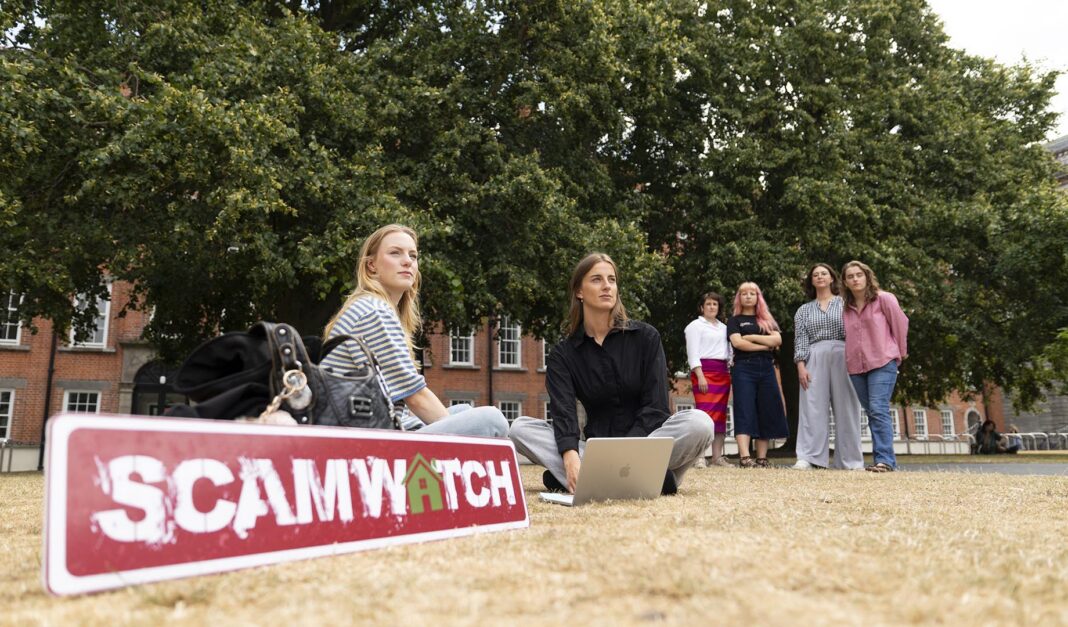
National housing charity Threshold has partnered with the Irish Council for International Students (ICOS) and Aontas na Mac Léinn in Éirinn (AMLÉ) as part of their 2026 Scamwatch Campaign to raise awareness of rental scams and help students protect themselves when searching for accommodation.
The annual campaign launches as thousands of students begin searching for accommodation ahead of the new academic year, with many facing significant challenges finding affordable housing in an increasingly competitive rental market. Threshold, ICOS and AMLÉ regularly support students seeking advice and assistance after encountering suspected rental scams or suspicious accommodation listings.
With student accommodation in short supply across the country, many students are turning to the private rental market to find somewhere to live. Limited availability, rising costs and the pressure to secure accommodation quickly can leave students more vulnerable to increasingly sophisticated scams.
Threshold, ICOS and AMLÉ are urging students to remain vigilant when searching for accommodation and to seek immediate advice if they encounter a suspicious advert or are unsure whether a property listing is genuine.
As part of the wider 2026 Scamwatch Campaign, Threshold has developed a dedicated Scamwatch toolkit to support student unions, accommodation officers and others working directly with student renters. The campaign materials, including resources translated into various languages including Irish, Spanish, Portuguese, Italian and German, are designed to help students from Ireland and abroad identify warning signs and avoid rental scams.
Commenting on the campaign Threshold Campaigns Officer Cat Clark, said: “Students entering the rental market for the first time can be particularly vulnerable to scams, especially when they are under pressure to find somewhere to live before term starts. Unfortunately, scammers take advantage of this urgency by creating fake adverts and using tactics designed to convince renters to hand over money quickly or risk losing their accommodation.
“Through the 2026 Scamwatch Campaign, we want to make sure all students know what warning signs to look out for and where they can turn for support if something does not feel right.
“While renters can take practical steps to protect themselves, the advice remains straightforward: if it appears too good to be true, it likely is. Threshold is encouraging anyone who is unsure about a property or advert to reach out to seek advice and support.”
ICOS works to support international students and protect their rights while they study in Ireland. International students can be especially vulnerable when searching for accommodation, as many are navigating an unfamiliar rental market, arranging housing from overseas or seeking support without an established support network in Ireland.
Orla Lehane, Acting Executive Director at ICOS said: “International students can face particular challenges when looking for accommodation. Many begin their search before they arrive in Ireland, may be unfamiliar with the rental market here and can feel enormous pressure to secure somewhere to live before starting their studies. Unfortunately, scammers can exploit that combination of urgency and uncertainty.
“We would strongly encourage students not to transfer money simply because they are afraid of losing an accommodation offer. Take the time to verify who you are dealing with, ask questions and seek advice if anything seems unclear or suspicious. At the same time, we cannot separate the prevalence of rental scams from the wider shortage of affordable student accommodation. When students are competing for a limited supply of housing, it creates exactly the kind of pressure that scammers can exploit.”
Student representative groups have warned that the ongoing shortage and high cost of accommodation is placing additional pressure on students, particularly first-time renters, making them more vulnerable to scammers operating through both online and direct adverts.
Daniel Walsh, President at AMLÉ said:
“Over the coming weeks, thousands of first-year students and their families will begin their search for accommodation and will be immediately confronted with the depth of the student accommodation crisis. This environment can create a sense of urgency, pushing students to enter more precarious rental agreements, and leaving them vulnerable to scammers.
Students and their families should remain vigilant to rental scams and take practical steps to verify any offers or advertisements seen online.”
Scamwatch 2026: Three rules to avoid rental scams
Inspect the Property in Person
Visit the property in person and take a picture of the landlord or letting agent’s photo ID before making any payments. Don’t rely solely on online photos or virtual tours if possible. While this may not always be possible for international students securing accommodation from overseas, students should take extra care to verify the property and seek advice before transferring any money.
Use Secure Payment Methods and a Contract
Use payment methods that offer protection. Avoid cash or transfers to unverified or foreign bank accounts. Get a written contract that outlines rent, deposits, and fees.
Trust Your Instinct and Seek Help
If it feels off, it probably is. Don’t rush. If in doubt, contact Threshold for free, expert advice.
Threshold’s helpline is open Monday to Friday, 9am-9pm at 1800 454 454, or online at www.threshold.ie/get-help for any private renter in need of advice or support.