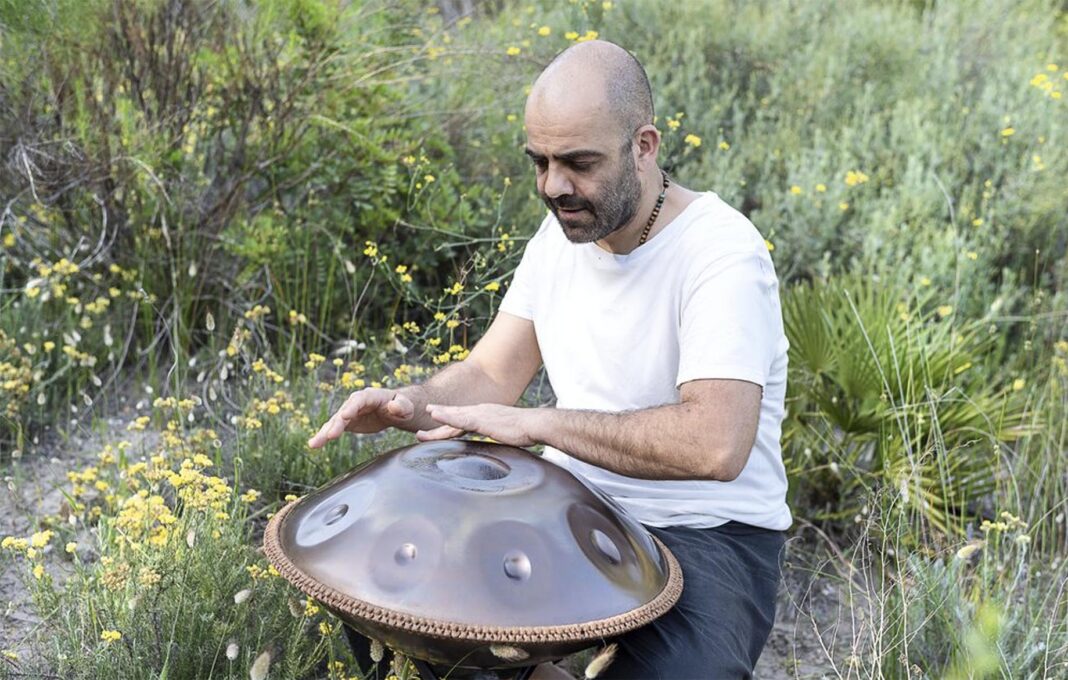
A Celtic minor handpan is a steel hand-played instrument tuned to a modern gapped minor scale, often chosen for its open, modal sound. For Clare readers who play or love Irish traditional music, that sound may feel both fresh and familiar.
The scale gives you a fixed set of notes, so some melodies will fit more readily than others. If you follow traditional music sessions from abroad, you can still listen for the same modal colours and melodic shapes. This guide explains where the instrument may fit beside familiar instruments, and where its limits matter.
You do not need to treat it as a new way to play traditional music. You can explore it as its own instrument, with a sound that may sit well beside a melody or add a gentle pulse. Think of it as a newcomer that can add a different colour alongside traditional instruments.
What is a handpan, and where does it come from?
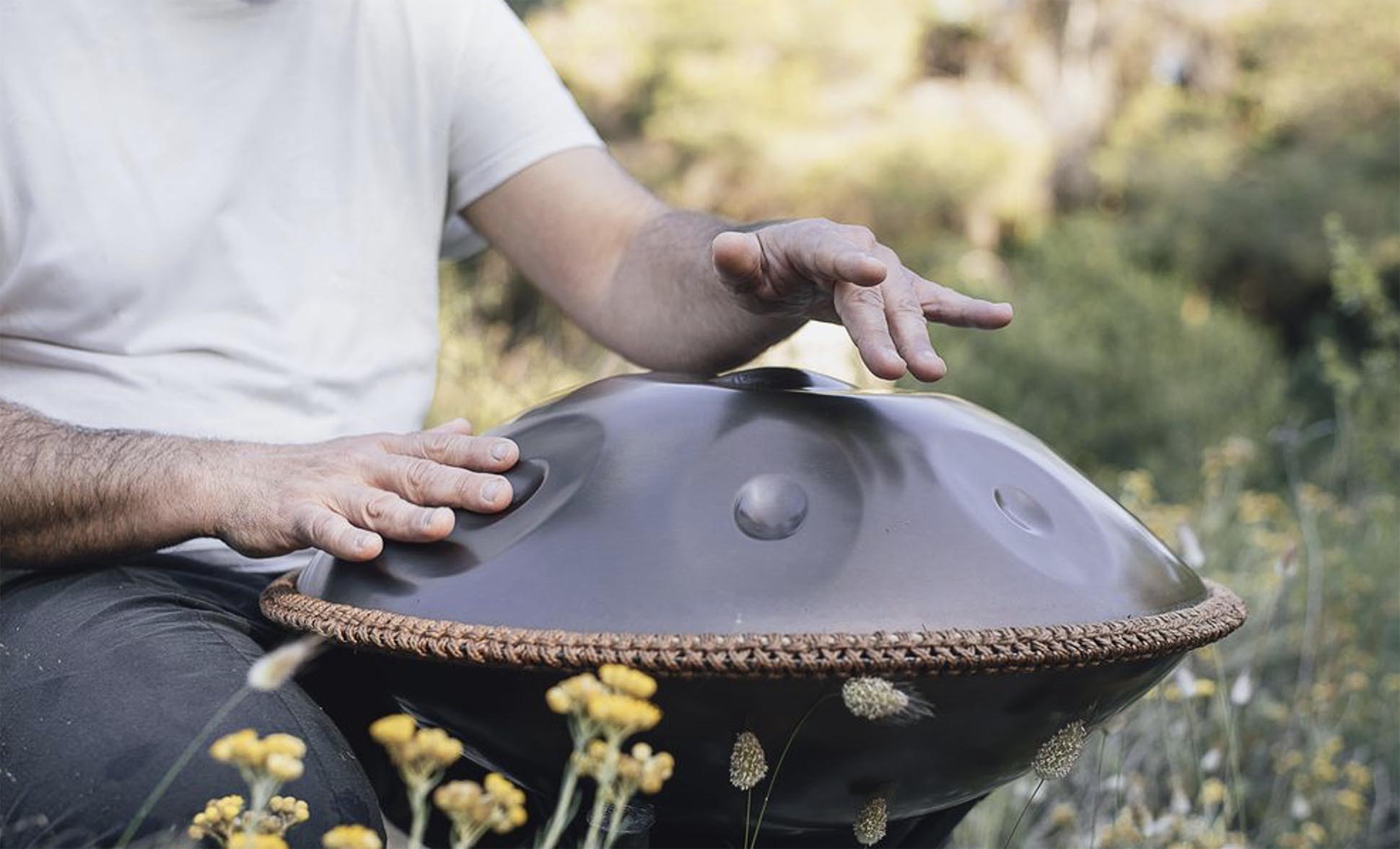
A handpan gives you a central note and a ring of tuned notes to play with your hands. It is a steel instrument played by hand, not with mallets. The central note is called the ding, and the other notes sit in tone fields around it.
The modern handpan grew out of the Hang, an instrument developed in Bern, Switzerland, in 2000. The original Hang was introduced at the Frankfurt Trade Fair in 2001. Its layout had a ding and seven or eight tone fields around it.
You make notes by tapping the steel with your fingers and hands. That touch lets you shape each sound through how and where you strike. It also means the instrument asks for a different approach from a drum played with sticks or mallets.
Unlike a piano or a fiddle, a handpan usually comes with one fixed set of notes. You cannot change its tuning to match every tune you encounter. Its fixed note collection makes the chosen scale part of the instrument’s character.
What is a Celtic minor handpan?
A Celtic minor handpan uses a modern maker’s name for a gapped minor scale, most often in D. A gapped scale leaves out one or more degrees from a seven-note scale. The name describes a handpan layout, not a scale with one historic definition.
A common D Celtic layout
On a D Celtic handpan, the note collection can be D, A, C, D, E, F, G, A and C. These notes cover more than one octave, with some pitches repeated at different heights.
A D Celtic Minor layout with a D3 ding has A3, C4, D4, E4, F4, G4, A4 and C5 around it. The layout omits B-flat, the sixth degree in the related seven-note scale.
The exact range and arrangement can vary between handpans. A note’s number shows its octave, so A3 and A4 share a name but sound at different heights. Check the layout of the instrument you are considering rather than relying on its scale name alone.
What does “gapped” mean?
A seven-note scale has seven different degrees before its notes repeat in the next octave. A gapped scale leaves at least one of those degrees out. That missing pitch can shape which melodies fit, though it does not make every tune in the scale’s key playable.
On a Celtic minor handpan, the label points to a particular modern note collection. It does not mean every maker uses the same layout, or that every tune with a Celtic label will fit.
What does leaving out the sixth change?
With the sixth left out, the scale does not settle firmly into just one minor mode. The same notes can support a natural minor (Aeolian) sound or a Dorian sound. Which colour you hear depends on the melody and its musical context.
In natural minor, the melody tends to give you a familiar minor feel. Dorian also has a minor quality, though its different sixth degree can make it sound more open. When the handpan leaves that degree out, neither colour has to dominate every phrase.
A melody may bring out one mood through its strongest notes, its resting points and the way its phrases move. Another melody can use the same handpan notes and suggest a different mode. This flexibility helps explain why melodies with related colours can feel at home on the layout.
You can hear a phrase as more settled or more open without naming its mode at once. Listen to where the melody seems to rest, then notice which notes give it direction. The melody’s context helps you hear whether the colour leans more Aeolian or Dorian.
Why can the scale feel familiar to an Irish ear?
The word “Celtic” can sound familiar to an Irish ear because many traditional tunes draw on modal colours. Most Irish traditional tunes are in the major (Ionian) mode, but Dorian, Aeolian and Mixolydian tunes are common in both Irish and Scottish traditional music. These modal colours may sound familiar without matching a particular tune.

Modal colours in Irish and Scottish tunes
A mode is a way of organising notes around a central pitch, giving a melody a particular feel. Dorian and Aeolian have minor colours, while Mixolydian has its own modal colour. These names help you describe a tune’s sound, but they do not mean every melody uses all the notes in a seven-note scale.
| Mode | Broad musical colour | Connection to the handpan discussion |
| Dorian | Minor colour | One colour a scale without a sixth can support |
| Aeolian | Natural minor colour | One colour a scale without a sixth can support |
| Mixolydian | Modal colour | A mode used in Irish traditional tunes |
Airs and gapped note patterns
Some Irish tunes use six different notes within an octave rather than seven. Some of these melodies omit the sixth degree, creating a gapped pattern. A related colour can help a melody fall naturally under your hands, though the rest of its notes still need to fit.
Slow airs can leave room for you to hear how a phrase turns around a central note. In faster music, short ornaments and changes in range may call for pitches the handpan does not have. A shared modal colour is a musical connection, not evidence that the handpan scale is a historical Irish scale.
Which Irish tunes suit a Celtic minor handpan?
A slow air or song melody in D or E minor modes is often a natural place to begin. The melody needs to stay within the notes and range of your particular layout. A tune’s key alone cannot tell you whether every phrase will fit.
Slow airs and song melodies
Some slow airs in D or E minor modes work well on a Celtic minor handpan. The slower pace gives you time to hear how each note sits against the melody. Song melodies in those modes can also suit the instrument when their range matches its layout.
Listen for repeated phrases and notes that feel like resting points. If the melody uses pitches outside the handpan’s set, you may need to leave those notes out or shape the phrase differently. A simple version can keep the tune’s main outline clear.
Fast dance tunes and wide-ranging melodies
Fast reels and jigs can be harder to fit, especially when they use ornaments or move across a wide range. Their quick turns may call for notes that are not on the handpan. The table gives you a first check, not a promise that every tune in a type will fit.
| Tune type | Likely fit on Celtic minor | What to listen for |
| Slow airs in D or E minor modes | Often a good fit | Melody stays within the available notes |
| Song melodies in D or E minor modes | Often a good fit | The melody’s range matches the layout |
| Fast reels and jigs with ornaments | Harder to fit | Quick cuts and rolls may call for unavailable notes |
Try following the melody slowly before adding any extra notes. That will show you whether its main shape sits comfortably on your instrument.
Why are some traditional tunes harder to play?
The main challenge with a fast reel or jig is fitting its ornaments and full range onto a fixed set of notes. A handpan has a limited number of notes and no chromatic notes. Chromatic notes are pitches outside the set scale, and a tune may use them for a passing turn or ornament.
Cuts and rolls can ask you to choose notes quickly while keeping the tune’s rhythm clear. If the needed pitches are missing, the ornament may not sound as intended. The challenge is not only speed; the right note must also be available.
A wide-ranging melody can travel beyond the handpan’s highest or lowest note. A tune may also use a pitch that falls between the scale’s fixed notes. In either case, you cannot reach the missing pitch by changing the instrument’s tuning as you play.
You can sometimes simplify a phrase by leaving out an ornament or changing a small part of its shape. That choice may work for private practice, but it can alter the tune’s character. A melody that sits outside the handpan’s available notes may need to be simplified or played on another instrument.
How can a handpan sit alongside traditional instruments?
A handpan can add a steady accompaniment or drone while a traditional melody stays in the foreground. It works best as a newcomer beside, not a replacement for, familiar instruments and voices. Its repeated notes can offer rhythmic colour without taking over the tune.
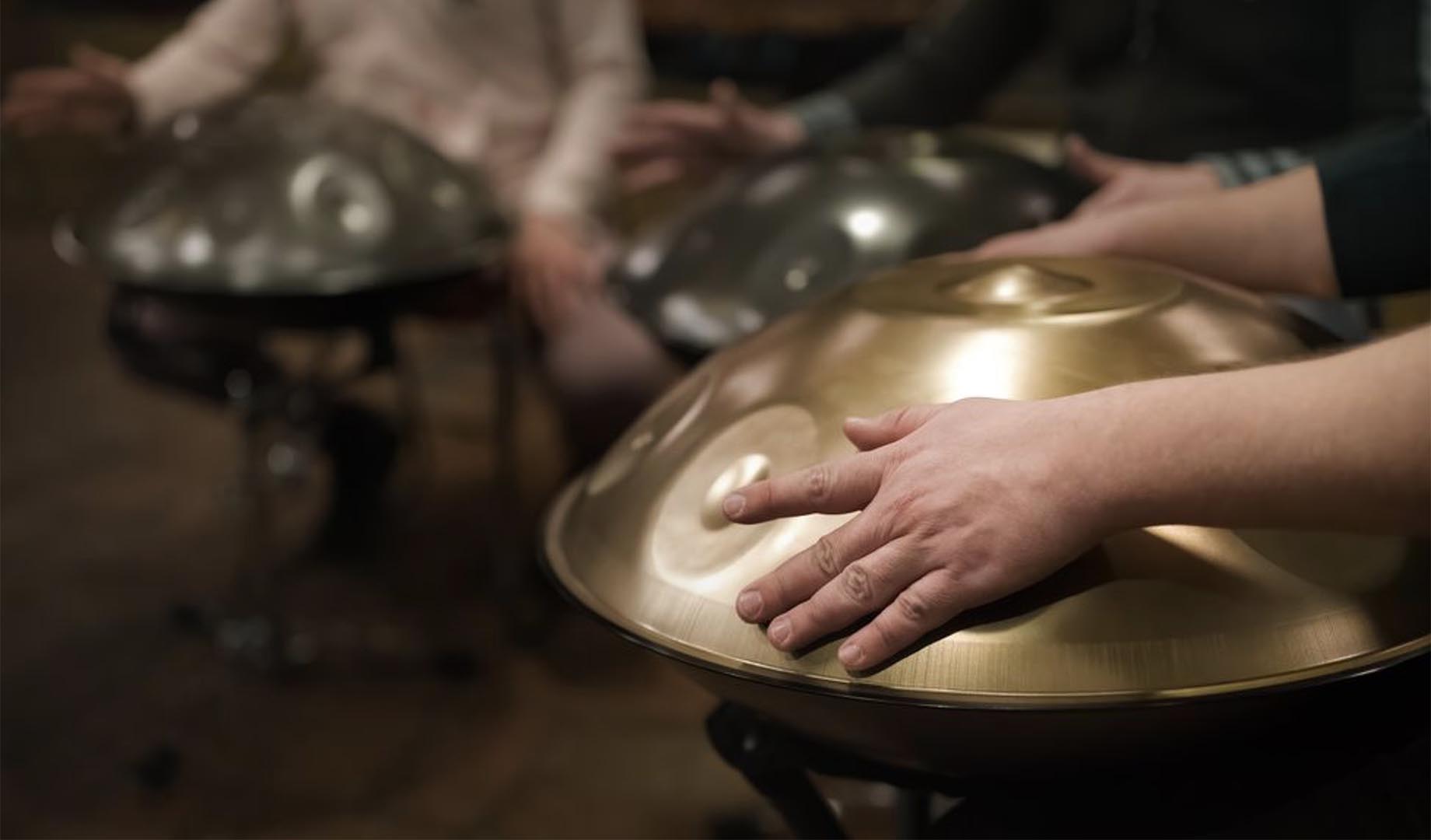
You can think about its part in relation to a whistle, flute, fiddle, harp or voice. Listen to the melody first, then keep your own part clear and light.
Whistle
Flute
Fiddle
Harp
Voice
A drone holds or repeats a note beneath a melody, while accompaniment can add a simple pulse. Rhythmic colour gives the music another texture, but too many strikes can crowd a tune. Let the handpan’s part support the melody rather than compete with it.
How does D Kurd compare with D Celtic?
The clearest difference between D Kurd and D Celtic is the B-flat in D Kurd’s note collection. D Celtic removes that sixth, while D Kurd includes it. That one note changes the colour and the kinds of phrases each scale can support.
The notes in each D scale
A standard 9-note D Kurd handpan has a D3 ding, with A3, B-flat3, C4, D4, E4, F4, G4 and A4 around it. A D Kurd 10 adds a high C. D Celtic removes B-flat from D Kurd’s note collection, leaving a different layout.
| Feature | D Celtic | D Kurd |
| Sixth | Omitted | B-flat included |
| Standard 9-note D layout | D3 ding and A3, C4, D4, E4, F4, G4, A4, C5 around it | D3 ding and A3, B-flat3, C4, D4, E4, F4, G4, A4 around it |
| Sound colour | More open and ambiguous | Darker minor colour |
The colour you hear
D Kurd has a darker minor colour because its note set includes the sixth. D Celtic leaves that note out, which can make its sound more open and ambiguous. The difference becomes clear when you play or hear the same phrase on both layouts.
The word “darker” describes a musical impression, not a rule about how every listener must feel. A melody can make either scale sound gentle, bold or spare.
How can you choose between the scales by ear?
A useful way to choose is to listen to both scales and notice which colour invites you to keep playing. Choose by the sound that feels right to you, not by a claim that one scale is better. If you can play both, compare them with the same short phrase.
Listen for the sound of the notes together, then notice how each layout shapes a simple melody. These checks can help you compare D Celtic and D Kurd without needing to know music theory.
Does the more open or ambiguous sound draw you in?
Do you prefer D Kurd’s darker minor colour?
Which notes and melodic phrases feel comfortable when you listen or play?
Take your time with each sound. A scale may appeal at first, then feel less natural once you repeat a few phrases. Choose the scale whose sound makes you want to return to it.
What should you know before playing one in a session?
A handpan can join a session most comfortably when you first find out whether its sound and key will fit. Handpans usually have 9 or 10 notes, so the key and available notes matter when following a tune. A familiar tune may still use pitches outside your handpan’s set scale.
In a traditional music session, the tune and the people playing it come first. A handpan can be a new sound in that setting, so listen before adding your part. A quiet, simple line gives you room to follow the tune without crowding it.
Ask before joining.
Play softly.
Follow the key of the tune.
The key affects which notes appear in a tune, while the handpan’s scale fixes the notes you can play. If you cannot follow a phrase closely, leave space rather than forcing notes that clash.
How do you care for a handpan in Ireland’s damp climate?
After playing, dry the handpan before putting it away. In Ireland’s damp climate, drying and storing the instrument after playing are practical parts of its care. Moisture left on the steel can affect its surface, so make this a simple habit.
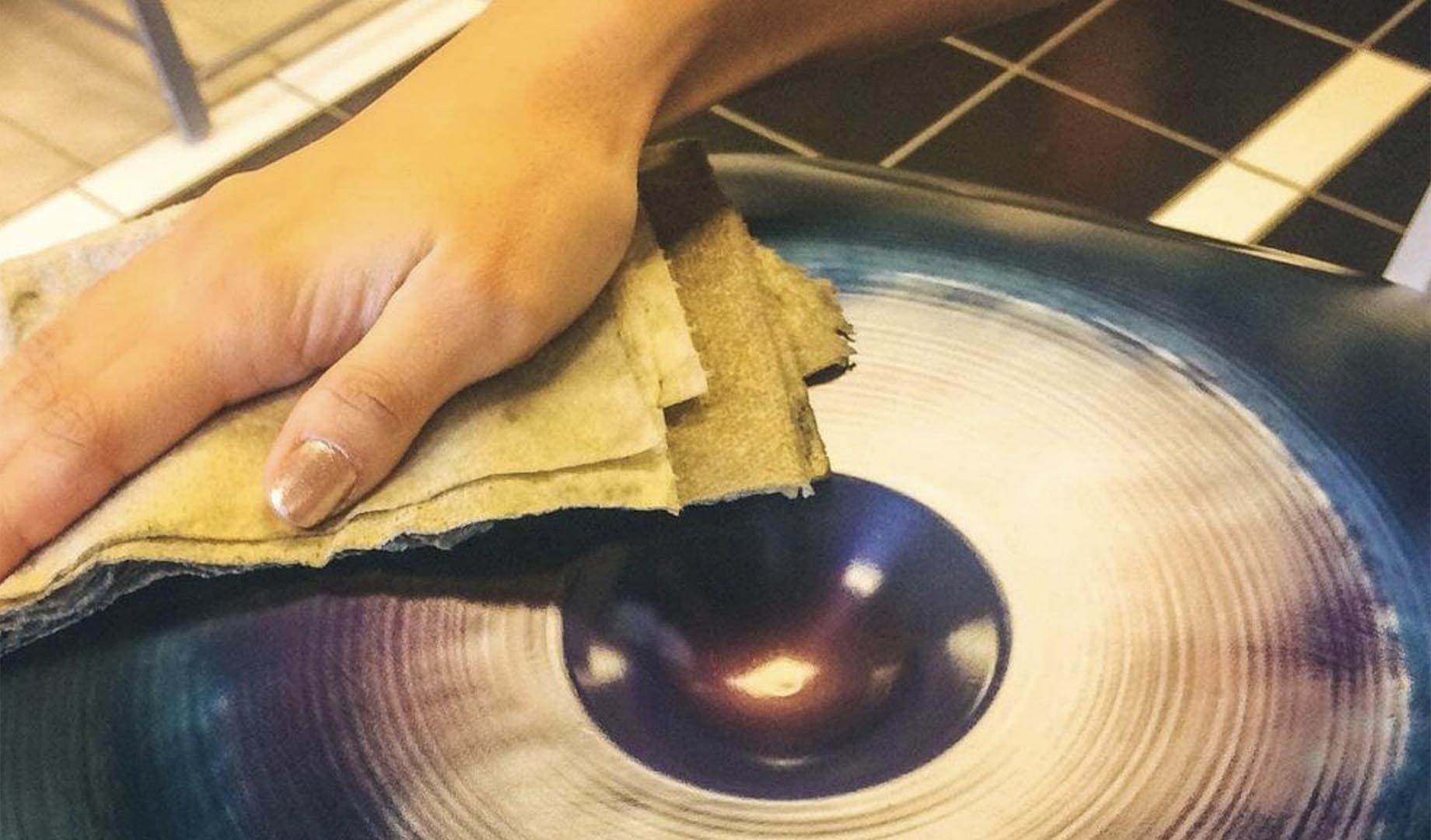
A few careful steps help protect the instrument between playing sessions. Use a clean, soft cloth, and follow any care advice made for the handpan’s finish. A thin layer of protective oil can help protect the steel.
Wipe the handpan dry after playing.
Apply a thin layer of protective oil.
Store it in its case.
Never leave it in a cold car.
Conclusion
A Celtic minor handpan is a hand-played steel instrument tuned to a modern gapped minor scale, often in D. Its omitted sixth gives the D Celtic scale an open, flexible modal colour that may appeal to listeners of traditional music.
It cannot play every tune, and it does not need to replace a familiar instrument to have a place beside one. Listen to both D Celtic and D Kurd, then choose the sound you most want to play.